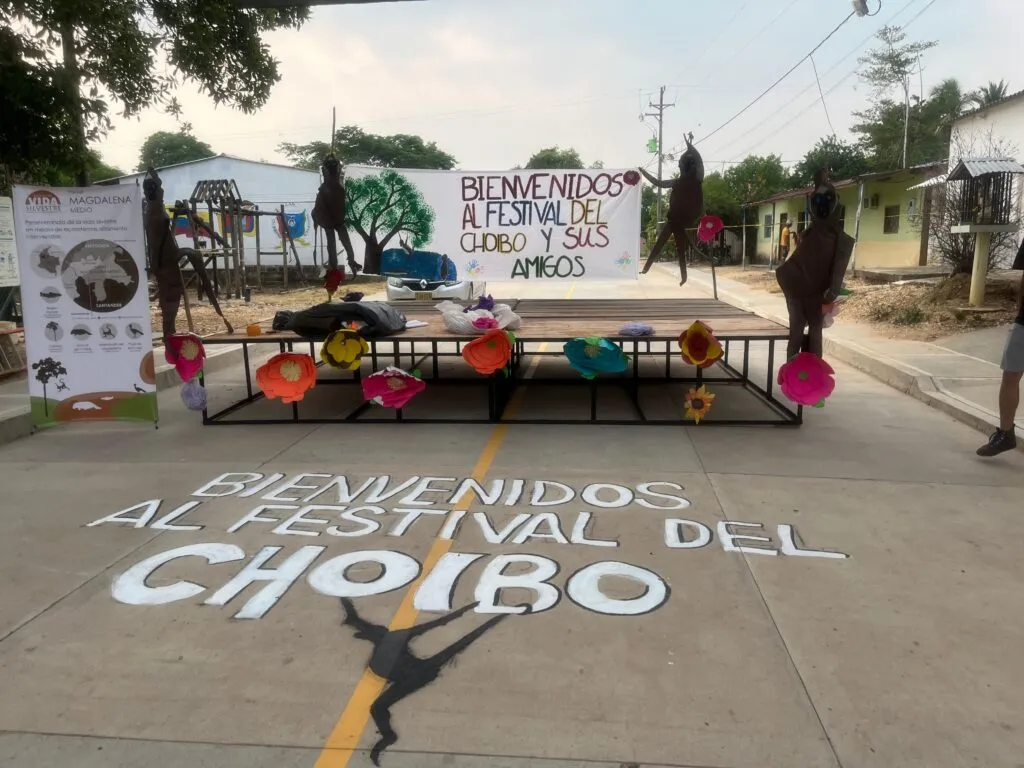
The choibo, the primate that plants the forest
Why the choibo is key to regenerating the forest of the Magdalena Medio and what threatens its survival today.
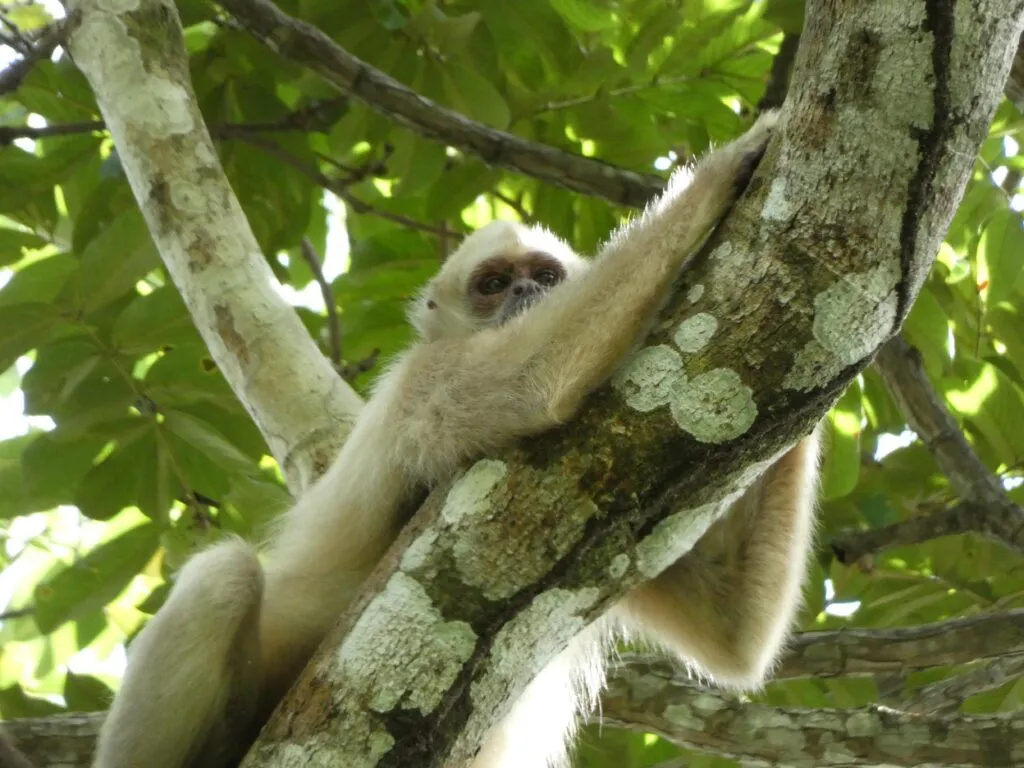
The choibo, also called brown spider monkey or Ateles hybridus, is one of the largest primates in Central and South America. An adult measures 45 to 50 centimeters, its tail 74 to 81, and it weighs between 7.5 and 10.5 kilos. It has long, slender arms, a prehensile tail and four fingers on each hand: it has no thumb.
A gardener of the forest
Its diet is made up mostly of fruit, plus leaves and flowers. Every time a choibo eats and moves on, it leaves seeds far from the tree that produced them. That helps the forest regenerate and keeps plants genetically diverse. This is why it is considered a seed disperser and a natural reforester.
An umbrella species
Choibos need large, connected forests. When they are present, the forest ecosystem is healthy. In conservation this is called an umbrella species: protecting it also protects many other species that share its habitat.
Life in a group
They live in groups of 4 to 6 individuals, although sometimes they gather in groups of up to 30. Most members of a group are related. They communicate with long distance, alarm and play calls.
Why it is in danger
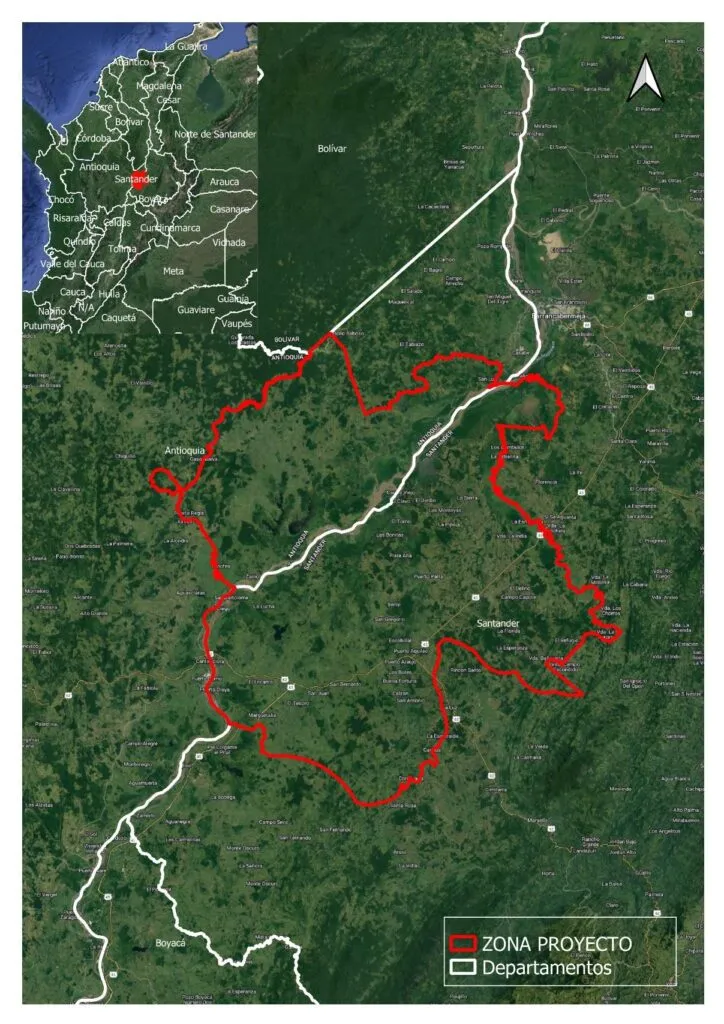
In Colombia they live in the forests of the Magdalena Medio and along the border with Venezuela. Deforestation, hunting and illegal trafficking have shrunk their habitat over the years, and the IUCN now classifies them as Critically Endangered.
What we can do
Protecting them takes a joint effort from governments, organizations and local communities: protect and restore their habitats, fight poaching, support research and involve communities. The Proyecto Primates Foundation works on all four, and you can join with a donation, by adopting a choibo or as a volunteer.